Showing posts with label things to avoid. Show all posts

Tuesday, February 27, 2007

your watching FOX.


Police were called to a Long Island man's house last week. The cops discovered the mummified remains of the resident, dead for more than a year, sitting in front of a blaring television set.

The 70-year-old Hampton Bays, New York, resident, identified as Vincenzo Ricardo, appeared to have died of natural causes. Police said on Saturday his body was discovered on Thursday when they went to the house to investigate a report of a burst water pipe.

"You could see his face. He still had hair on his head," Newsday quoted morgue assistant Jeff Bacchus as saying. The home's low humidity had preserved the body.

Officials could not explain why the electricity had not been turned off, considering Ricardo had not been heard from since December 2005.

Neighbors said when they had not seen Ricardo, who was diabetic and had been blind for years, they assumed he was in the hospital or a long-term care facility.

Friday, January 26, 2007

T.V. growing up. Its a wonder I'm alive

Big John, Little John
was a Saturday morning NBC sitcom from 1976 produced by Sherwood Schwartz which starred Robbie Rist as the young lead, and Herb Edelman as the elder John.
The show centered around a 45-year-old school teacher named John Martin (played by Edelman). While vacationing in Florida, he discovered the real Fountain of Youth. He took a small drink from it and changed into a 12-year-old boy (played by Rist), and back again. Martin had no control over when the change would occur. Only his immediate family knew about the recurring changes and, to explain the appearance of the 12-year-old John, claimed that he was their nephew.
Throughout the series, John unsuccessfully tried to find a cure for his predicament.


Carter Country was an American television sitcom, that ran from 1977 to 1979 on ABC. It was set in a small town in Georgia (presumably near the part of the state from which U.S. President Jimmy Carter hailed, thus the title), and featured Victor French as white police chief Roy Mobey and Kene Holliday as city-bred, college-educated, African-American Sergeant Curtis Baker. It also featured Richard Paul as Mayor Burnside (who coined a minor catchphrase with his manic, "Handle it, handle it, handle it!"), Harvey Vernon as officer Jasper DeWitt, and Barbara Cason as town employee Cloris Phebus. Additional comic support was provided by Texas-born actor Guich Koock who played the part of goofy deputy Harley. Vernee Watson rounded out the cast. The plot was centered around the stereotypical racism of the Deep South. The show was often characterized as being an irreverent, comedic version of the movie In the Heat of the Night.

Out of the Blue was a short-lived American fantasy-based sitcom that aired on the American Broadcasting Company during the fall of 1979. It was a spin-off of Happy Days, patterned after Mork & Mindy.

The series starred Jimmy Brogan as Random, an angel-in-training who is assigned to live with (and act as guardian angel for) a family and work as a high school teacher. The series co-starred Dixie Carter (later of Designing Women) and Eileen Heckart.

The unsuccessful series aired from September 9 to December 16, 1979.


Oh my God then there was yet another Happy Days spin off:

Blansky's Beauties premiered February 12, 1977 .
Nancy Blansky ( Nancy Walker) was den mother to a bevy of beautiful Las Vegas showgirls in this short-lived comedy. In addition to keeping order in the chaotic apartment complex where they all lived, Nancy staged the girls' big numbers at the Oasis Hotel.
Emilio (Johnny Desmond), the matire'd, was Nancy's boyfriend. To help Nancy defray costs of her apartment, Sunshine (Lynda Goodfriend) and Bambi (Caren Kaye) shared it with her, along with her nephews Joey DeLuca (Eddie Mekka), a choreographer, and leering, 12-year-old ("going on 28"), Anthony DeLuca (Scott Baio). Anthony was forever trying to impress Bambi, who much to his chargin treated him like a kid brother, as did almost all of Nancy's girls. Also sharing Nancy's apartment was a huge Great Dane named Blackjack who was shown in the opening credits playing blackjack.

Wait, now lets see:
Happy Days was a spin off of...
LOVE AMERICAN STYLE (Love and the Happy Days)
From Happy Days we have:

Jonie Loves Chachi.
Laverne and Shirley.
Blansky's Beauties.
Mork and Mindy.
Out of the Blue.

Man, Happy Days was not even a funny show.

Tuesday, January 23, 2007

Another "make fun of disabled people" movie


"Slapstick: of another kind" seems to have avoided DVD in the USA. While it may not be the worst film ever made it is certainly in the running. Here is a synopsis of the film. It reads far better than it is.

Basicly it is Madaline Kahn and Jerry Lewis doing "retard" jokes for 80 odd minutes.

The People's Republic of China is severing relations with all other nations. They have mastered the art of miniaturization, and have shrunk all their people to the height of 2 inches. The ambassador of China, Ah Fong (Pat Morita), announces during a press conference that they key to all knowledge can be found from twins.

Caleb Swain (Jerry Lewis) and his wife Letitia (Madeline Kahn) are called 'the most beautiful of all the beautiful people' by the press. However, when Letitia gives birth to twins who are called "monsters." The family doctor, Dr. Frankenstein (John Abbott) informs the parents that the twins won't live more than a few months. The Swain's decide to allow the twins to live their short life in a mansion staffed with servants, including Sylvester (Marty Feldman).

Fifteen years later the twins (also played by Lewis and Kahn) are "still alive." They have large heads and appear to be retarded. Their parents, who have not seen them in all those years, receive a visit from the former Chinese ambassador who inform them that their children are genuises who can solve the world's problems. They dont hold a candle to Chance the gardener!

The parents, along with the US president (Jim Backus) pay the children a visit. They reveal themselves to be well-behaved and intelligent, explaining that they acted "stupid" around the servants because they were simply emulating them.

A series of tests reveal that there is a telepathic connection between the twins, and their intelligence is only functionable when they are together. Furthermore, when their heads are touching they reach a level of intelligence that has never been surpassed.

Their parents, fearful that incest may be prevalent, separate the two. They become despondant without each other, and the Chinese ambassador appears again to tell them to seek each other out. Once united, a spaceship appears and reveals that they are really aliens who were sent to Earth to solve all of the planet's problems. However, their alien father (voice of Orson Welles) reveals that Earth cannot handle their intelligence and returns them to their home planet. Whoa. Now imagine that film but not funny. It plays much better as a horror film.

Sunday, January 21, 2007

The ultimate germ warfare in the making

Cordyceps is a genus of ascomycete fungi, the most famous of which is the species that parasitizes the vegetable caterpillar — Cordyceps sinensis that has long been considered a precious ingredient in Chinese traditional medicines. All Cordyceps species are parasitic, mainly on insects and other arthropods (they are thus entomopathogenic fungi); a few are parasitic on other fungi like the subterranean, truffle-like Elaphomyces. The mycelium invades and eventually replaces the host tissue, while the elongated fruiting body (stroma) may be cylindrical, branched, or of very complex shape. The stroma contains many flask-shaped perithecia (sing. perithecium): hollow, flask-shaped structures usually embedded in the stromatic tissue that contain many long, cilindric asci. These in turn contain the filiform (thread-like) ascospores, which easily break into fragments and presumably constitute an infective stage.


The genus has a worldwide distribution and more than 300 species are currently known — most have been described from Asia (notably China, Japan, Korea and Thailand). The genus has many anamorphs (asexual states), of which Beauveria (possibly including Beauveria bassiana), Metarhizium, and Paecilomyces (section Isaria) are the better known, since these have been used in biological control of insect pests. Cordyceps species are particularly abundant and diverse in humid temperate and tropical forests.


Each fungus has its own target. EACH FUNGUS HAS ITS OWN TARGET!
Why only insects?

Its just a matter of time.

Friday, January 19, 2007

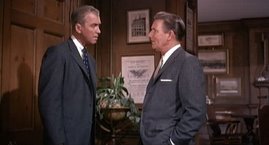
Didn't he get kicked off of back to the future?


I have trouble telling these two apart.

Wednesday, January 17, 2007

I'm completely disgustipated.


1. Name of the Organism:
Ascaris lumbricoides and Trichuris trichiura Humans worldwide are infected with Ascaris lumbricoides and Trichuris trichiura; the eggs of these roundworms (nematode) are "sticky" and may be carried to the mouth by hands, other body parts, fomites (inanimate objects), or foods.

2. Nature of Acute Disease:
Ascariasis and trichuriasis are the scientific names of these infections. Ascariasis is also known commonly as the "large roundworm" infection and trichuriasis as "whip worm" infection.

3. Nature of Disease:
Infection with one or a few Ascaris sp. may be inapparent unless noticed when passed in the feces, or, on occasion, crawling up into the throat and trying to exit through the mouth or nose. Infection with numerous worms may result in a pneumonitis during the migratory phase when larvae that have hatched from the ingested eggs in the lumen of the small intestine penetrate into the tissues and by way of the lymph and blood systems reach the lungs. In the lungs, the larvae break out of the pulmonary capillaries into the air sacs, ascend into the throat and descend to the small intestine again where they grow, becoming as large as 31 X 4 cm. Molting (ecdysis) occurs at various points along this path and, typically for roundworms, the male and female adults in the intestine are 5th-stage nematodes. Vague digestive tract discomfort sometimes accompanies the intestinal infection, but in small children with more than a few worms there may be intestinal blockage because of the worms' large size. Not all larval or adult worms stay on the path that is optimal for their development; those that wander may locate in diverse sites throughout the body and cause complications. Chemotherapy with anthelmintics is particularly likely to cause the adult worms in the intestinal lumen to wander; a not unusual escape route for them is into the bile duct which they may occlude. The larvae of ascarid species that mature in hosts other than humans may hatch in the human intestine and are especially prone to wander; they may penetrate into tissues and locate in various organ systems of the human body, perhaps eliciting a fever and diverse complications.
Trichuris sp. larvae do not migrate after hatching but molt and mature in the intestine. Adults are not as large as A. lumbricoides. Symptoms range from inapparent through vague digestive tract distress to emaciation with dry skin and diarrhea (usually mucoid). Toxic or allergic symptoms may also occur.


4. Diagnosis of Human Illness:
Both infections are diagnosed by finding the typical eggs in the patient's feces; on occasion the larval or adult worms are found in the feces or, especially for Ascaris sp., in the throat, mouth, or nose.

5. Associated Foods:
The eggs of these worms are found in insufficiently treated sewage-fertilizer and in soils where they embryonate (i.e., larvae develop in fertilized eggs). The eggs may contaminate crops grown in soil or fertilized with sewage that has received nonlethal treatment; humans are infected when such produce is consumed raw. Infected foodhandlers may contaminate a wide variety of foods.

6. Relative Frequency of Disease:
These infections are cosmopolitan, but ascariasis is more common in North America and trichuriasis in Europe. Relative infection rates on other continents are not available.

7. Course of Disease and Complications:
Both infections may self-cure after the larvae have matured into adults or may require anthelmintic treatment. In severe cases, surgical removal may be necessary. Allergic symptoms (especially but not exclusively of the asthmatic sort) are common in long-lasting infections or upon reinfection in ascariasis.

8. Target Populations:
Particularly consumers of uncooked vegetables and fruits grown in or near soil fertilized with sewage.

9. Food Analysis:
Eggs of Ascaris spp. have been detected on fresh vegetables (cabbage) sampled by FDA. Methods for the detection of Ascaris spp. and Trichuris spp. eggs are detailed in the FDA's Bacteriological Analytical Manual.